
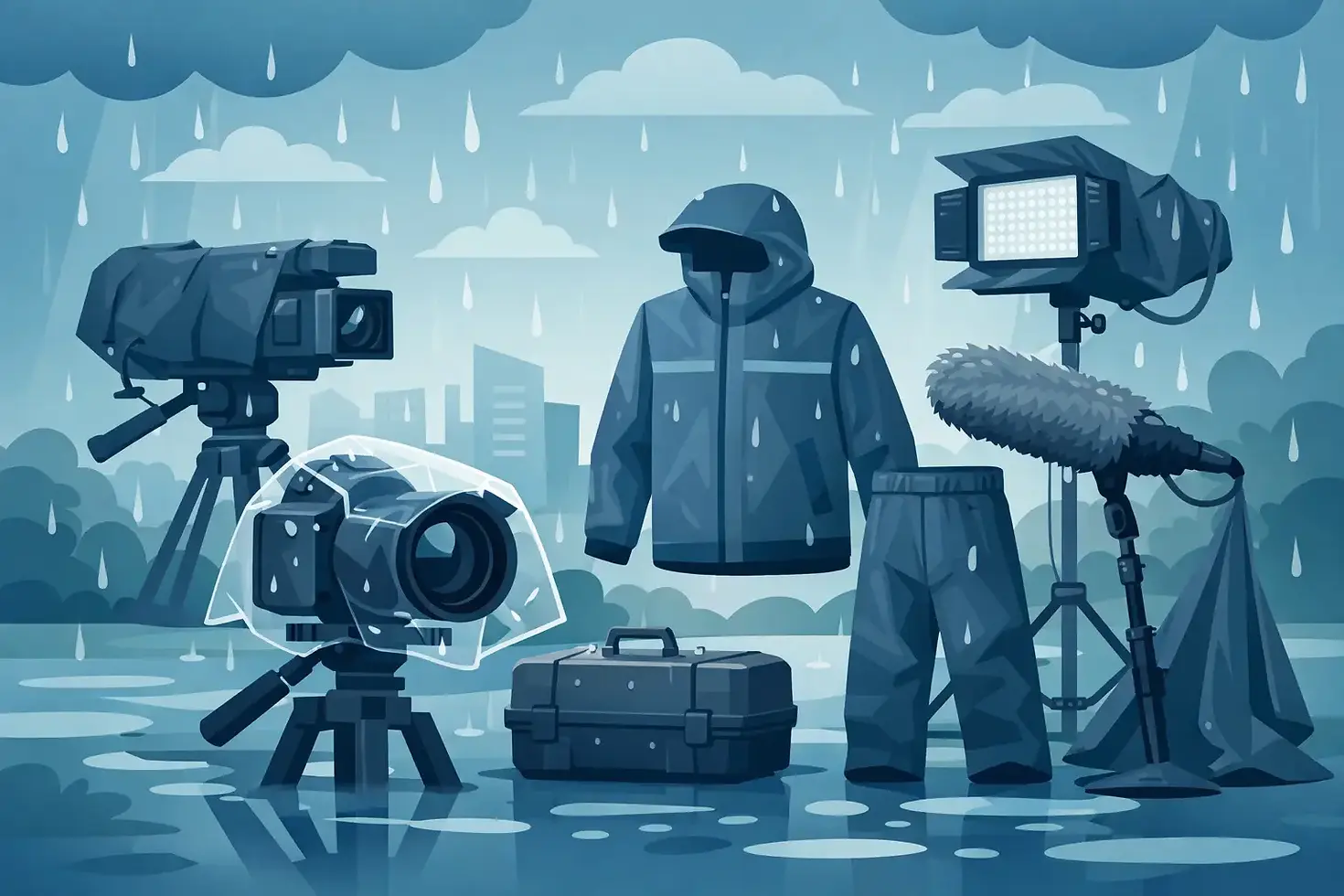
Waterproofing Gear for Rain Scenes That Holds Up
A rain effect can look simple on screen: water falls, light catches it, talent hits the mark. On set, it is a controlled wet environment with cameras, distribution, wardrobe, sound, set dressing, and people working inside it. Waterproofing gear for rain scenes is not a last-minute pile of plastic and tape. It is part of the effects plan from the first tech scout through the final reset.
For a rain sequence to move efficiently, the crew needs more than rain bars and pumps. They need protected work areas, a drainage path, electrical separation, dry storage, and equipment choices that match the shot. The goal is not to make every item waterproof. The goal is to keep essential systems dry, keep wet systems controlled, and make the whole setup safe to operate.
Start With the Rain Zone, Not the Gear List
The first question is where the water will travel. Map the effect area, splash radius, overspray, runoff, and the paths crew will use to enter and exit. A downpour on a tight exterior set behaves differently than rain on a soundstage, under a condor, or in a practical interior with removable walls. Wind direction, rain-bar height, nozzle pressure, lens angle, and the surface underfoot all change the real wet zone.
Build three working areas: the active rain zone, the splash zone around it, and a protected dry zone. Cameras and lighting may need to work at the edge of the splash zone, but battery charging, data management, monitors, backup gear, and crew staging should stay in the dry zone whenever possible. This separation prevents a minor leak or a drifting rain pattern from becoming a department-wide stoppage.
A proper effects survey also identifies low points, drains, door thresholds, electrical rooms, cable paths, and any place water could migrate after the shot wraps. Water rarely stays where it is aimed. It follows grade, gaps in decking, wrinkles in floor protection, and open seams in the set.
Protect Cameras Without Blocking the Shot
Camera protection has to preserve access. A cover that keeps a body dry but prevents an operator from seeing controls, pulling focus, changing media, or moving with a stabilized rig is not a workable solution.
For locked-off or studio-style builds, fitted rain covers, matte box covers, lens hoods, and clear viewing windows can keep the camera functional while leaving critical controls available. Add a properly positioned rain hat or overhead deflector when the frame allows it. The deflector should be high enough and wide enough to stop direct drops without appearing in reflections, changing the light, or interfering with a crane, dolly, or remote head.
Handheld, Steadicam, gimbal, and vehicle work require a different approach. These shots often need lighter, purpose-built covers, protected cable connections, frequent lens checks, and a dry reset station close by. A heavy plastic wrap may protect the body but create heat buildup, restrict movement, or trap moisture around controls. It depends on the camera package, duration of the wet take, and how much the rig needs to move.
Lenses deserve their own plan. Rain on the front element can be useful if the director wants a raw, immediate look. More often, it ruins continuity and forces repeated resets. Keep microfiber cloths, air blowers where appropriate, lens tissue, and a designated dry case at camera. Avoid relying on improvised wiping during a take. If the shot needs a consistently clean lens, position rain bars and flags to reduce direct impact while still giving the frame visible rain.
Electrical Protection Is a System, Not a Cover
No waterproof bag makes unsafe electrical placement acceptable. Keep power distribution outside the wet area whenever the layout permits, elevate connections from standing water, protect cable transitions, and use equipment rated for the conditions. Ground-fault circuit interrupter protection, proper bonding, weather-resistant components, and qualified electrical oversight are fundamental.
Cable ramps and floor protection can help manage crossings, but they can also create channels that collect water. Inspect them during the setup, not after the first take. Raise cable connections on approved stands or support systems where practical, create drip loops in hanging cable runs, and keep connectors oriented and covered according to their intended use.
Every production should establish who has authority to stop the effect if water reaches an unsafe area. That decision cannot wait for a debate at video village. The effects team, electrics, grips, and production management need a clear communication path before water is turned on.
Do Not Treat Tape as Waterproofing
Tape has a place in rain work. It can secure a cover edge, manage a temporary seam, or keep a label readable. It is not a substitute for rated enclosures, proper connector protection, or drainage planning. Water finds adhesive failures quickly, particularly under continuous spray, heat, and foot traffic.
Keep Sound, Comms, and Data Out of the Wet Workflow
Sound equipment is especially vulnerable because it often needs to operate close to the action. Protect transmitters, receivers, lavalier connections, boom electronics, and IFB systems with purpose-built covers or dry placement strategies. Wardrobe and sound should coordinate before talent is wet down. A hidden transmitter that becomes soaked halfway through a setup creates both a technical problem and a continuity problem.
Radios need protection, but crews also need to hear them. Waterproof radio pouches, remote mics, headsets, and protected charging locations are more useful than sealing a radio so completely that its controls cannot be reached. Build in a method for swapping wet or depleted units without sending people through the active rain zone.
For camera media and data, designate a genuinely dry handoff point. Cards, drives, readers, labeling supplies, and laptops should never live on a folding table just outside the rain line. Give the digital imaging technician and data team a covered, powered, stable workspace with a clean route for media transfer.
Protect the Crew, Then Protect the Pace
Rain scenes get slower when the crew has nowhere dry to work. Covered pop-ups, tents, wagons, heated holding areas where needed, dry gloves, towels, and replacement rain gear are not comfort extras. They keep operators, technicians, and performers able to work safely through multiple takes.
Footwear matters as much as rain jackets. Wet surfaces combined with cable runs, stairs, irregular terrain, and low light create a real slip hazard. Use slip-resistant footwear, manage hoses and cables cleanly, and place absorbent mats or non-slip surfaces at entrances, stairs, and transition points. Reassess after every major reset because runoff patterns change.
Schedule also affects waterproofing decisions. A single controlled burst can be handled with a compact protection package and fast towel-down. An overnight rain sequence or a full day of repeatable wet takes needs rotating dry gear, protected charging, recovery time for equipment, and a crew plan that accounts for fatigue and cold stress. Trying to operate a long rain day with the prep level of a one-shot insert is how small issues compound.
Drainage Determines Whether the Set Stays Usable
The audience sees falling rain. The production lives with the water after it lands. Before the first take, confirm where runoff goes, how quickly it moves, and what happens if the system runs longer than planned. On stage, that may mean berms, containment, squeegee teams, wet vacs, and protected drain routes. On location, it may involve temporary containment, pumps, catch basins, and site-specific rules for discharge.
Do not wait until water pools around a doorway, camera track, or electrical path. Assign crew and equipment to water management during the effect, not only after cut. The ability to clear standing water quickly often determines whether the production can maintain its shot schedule.
Build a Reset Station Before the First Take
The strongest rain setup includes a nearby reset station stocked for the departments actually working wet. This is where covers are checked, lenses are dried, batteries are swapped, towels are replaced, and gear is inspected before returning to the rain zone.
The station should be covered, organized, and far enough from the effect that it remains dry even when wind shifts. It should also have a clear owner. If everyone assumes someone else is restocking towels, checking covers, or removing wet equipment from service, the reset will fail when the pace increases.
For complex rain work, 2nd Unit Solutions plans waterproofing alongside the effect itself: rain pattern, shot requirements, electrical coordination, runoff, and crew access are treated as one operating plan. That approach protects the image without creating an unworkable set.
A good rain scene should feel difficult only to the audience. When protection, drainage, and resets are established before water is flowing, the crew can focus on the work that belongs in the frame.


Comments